

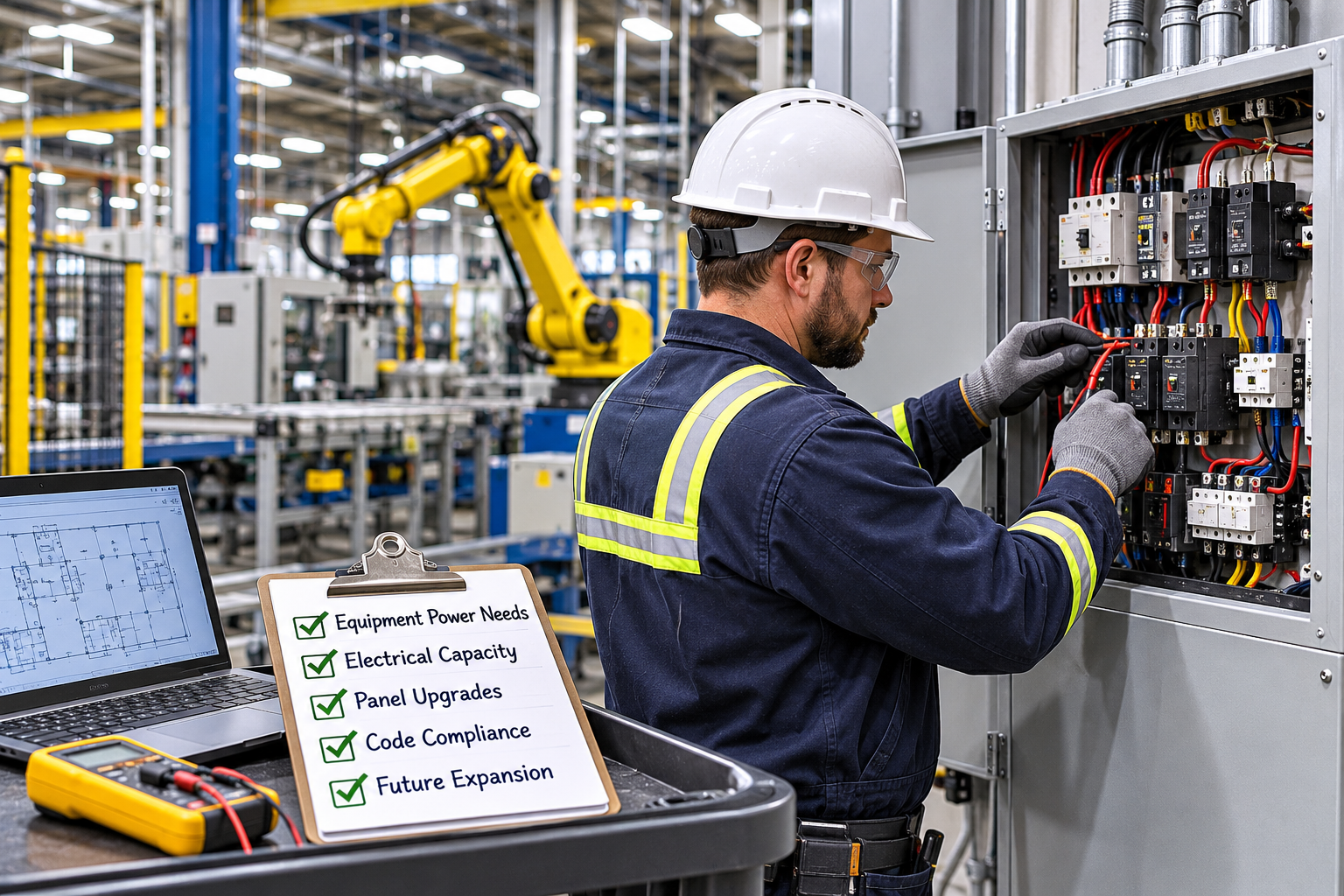
Adding new manufacturing equipment can be an exciting step for your business. Whether you’re installing an automated production line, expanding your machining capabilities, or replacing outdated equipment with more efficient technology, these investments can improve productivity and create new growth opportunities. However, there’s one critical consideration that can easily be overlooked during the planning process: whether your facility’s existing electrical infrastructure can support the additional demand. For manufacturing businesses throughout Raleigh and the Research Triangle, electrical limitations can delay equipment installations, interrupt production schedules, and introduce unexpected project expenses.
Before installing new manufacturing equipment, facility managers should have an industrial electrical contractor evaluate their existing electrical capacity, distribution systems, wiring, circuit protection, and equipment connection requirements. Completing this assessment early helps identify necessary electrical upgrades and allows businesses to coordinate improvements around their production schedules.
When planning a manufacturing expansion, consider these important electrical priorities:
-
Determine whether your existing electrical service can accommodate additional machinery.
-
Review equipment voltage, amperage, phase, and power requirements.
-
Evaluate electrical panels, transformers, and distribution systems for available capacity.
-
Coordinate electrical installations around production schedules to minimize downtime.
-
Consider future equipment additions when designing electrical infrastructure improvements.
At Box Electric Company, we understand that reliable electrical infrastructure is fundamental to successful manufacturing operations. Our commercial and industrial electrical contracting experience allows us to help businesses throughout Raleigh and surrounding North Carolina communities prepare their facilities for changing production demands.
Can Your Manufacturing Facility Handle the Electrical Load of New Equipment?
Determining whether your manufacturing facility can handle additional electrical loads requires evaluating both its incoming electrical service and the distribution infrastructure that delivers power to individual machines. Even if your building has historically operated without electrical problems, adding new equipment could push certain components beyond their available capacity.
Understand Your New Machinery’s Power Requirements
Before purchasing or installing manufacturing equipment, obtain the manufacturer’s electrical specifications. Modern production machinery may have considerably different electrical requirements than the equipment it’s replacing.
Important specifications include:
-
Operating voltage and amperage
-
Single-phase or three-phase power requirements
-
Maximum electrical demand
-
Motor startup current
-
Dedicated circuit requirements
-
Grounding and bonding requirements
-
Manufacturer-specified electrical protection
For example, a metal fabrication facility in Garner adding a new CNC machine may require electrical improvements even if the machine fits comfortably within the existing production area. Physical space and available electrical capacity are two entirely different considerations.
Evaluate Your Facility’s Existing Electrical Capacity
An industrial electrical contractor can evaluate whether your facility’s existing service, panels, transformers, and distribution equipment can accommodate additional machinery. This assessment should consider current production demands as well as the anticipated requirements of new equipment.
Simply identifying unused breaker spaces within an electrical panel doesn’t establish that sufficient electrical capacity is available. The panel, its incoming power supply, and upstream distribution equipment must also be capable of supporting the additional load.
Account for Simultaneous Equipment Operation
Manufacturing facilities often operate multiple machines, ventilation systems, air compressors, lighting systems, and other electrical equipment simultaneously. Evaluating each machine independently may overlook the cumulative demand placed on your facility.
This is particularly important when adding a second production shift or expanding an automated assembly line. We recommend evaluating how equipment will operate under realistic production conditions rather than relying solely on historical electrical usage.
Industrial Electrical Upgrades Commonly Required When Adding Manufacturing Equipment
Industrial electrical upgrades may include additional circuits, larger distribution panels, wiring improvements, transformers, and dedicated equipment connections. The specific improvements your manufacturing facility needs will depend on its existing infrastructure, equipment specifications, and long-term production objectives.
Electrical Panel and Distribution System Upgrades
Older industrial buildings may have electrical distribution systems designed for significantly different manufacturing processes. As production demands increase, existing panels and distribution equipment may no longer provide sufficient capacity or flexibility.
Our electrical upgrade services help businesses modernize their infrastructure to accommodate changing operational requirements. Depending on your facility, improvements may involve additional distribution equipment, panel replacements, or larger-scale electrical renovations.
Dedicated Circuits and Manufacturing Facility Electrical Wiring
Industrial equipment frequently requires dedicated electrical circuits designed around its particular operating characteristics. Properly designed circuits help deliver reliable power while providing appropriate protection against electrical faults and overloads.
Manufacturing facility electrical wiring must also account for environmental conditions. Exposure to moisture, dust, vibration, elevated temperatures, and certain industrial processes can influence which wiring methods and materials are appropriate.
Equipment Connections and Electrical Disconnects
New manufacturing machinery must be connected according to applicable electrical codes and manufacturer requirements. Depending on the equipment, installation may involve specialized connections, disconnect switches, grounding, and coordination with the machinery’s control systems.
Accessible electrical disconnects also help authorized personnel isolate equipment during servicing and maintenance. These components should be incorporated into the installation plan rather than treated as an afterthought.
Electrical Infrastructure for Automated Manufacturing
Manufacturers throughout Morrisville, Durham, and Research Triangle Park increasingly rely on automated equipment, connected production systems, and computerized controls. These technologies can introduce additional electrical and data infrastructure requirements.
Our experience supporting manufacturing facilities extends to electrical wiring, technology infrastructure, and data cabling. Coordinating these systems during equipment installations can help businesses avoid unnecessary modifications later.
Warning Signs Your Industrial Electrical System Needs an Upgrade
An outdated or undersized industrial electrical system may reveal its limitations through recurring circuit breaker trips, equipment performance issues, overheating, and unexpected production interruptions. Recognizing these warning signs before adding machinery can help manufacturing facilities avoid more expensive problems.
Common indications that your facility may need industrial electrical upgrades include:
-
Circuit breakers that frequently trip during production
-
Equipment that shuts down unexpectedly
-
Electrical panels with limited expansion capacity
-
Unusual buzzing sounds or burning odors near electrical equipment
-
Discolored electrical components or visible insulation deterioration
-
Voltage fluctuations affecting sensitive production equipment
-
Difficulty accommodating additional machinery or production lines
-
Electrical components that are obsolete or difficult to replace
These symptoms don’t necessarily mean your entire electrical system requires replacement. However, they warrant professional evaluation to determine whether targeted repairs or more extensive improvements are appropriate.
If you notice burning odors, smoke, or signs of electrical overheating, follow your facility’s emergency procedures and keep employees away from the affected equipment until qualified personnel can address the situation.
Consider the Financial Impact of Unexpected Downtime
For manufacturing businesses, electrical problems can affect considerably more than maintenance budgets. When production equipment stops unexpectedly, the financial consequences may include lost production hours, missed delivery deadlines, wasted materials, and additional labor expenses.
Consider a manufacturing facility in Raleigh where a newly installed machine causes recurring electrical interruptions. Even if the machinery itself operates correctly, inadequate electrical infrastructure could prevent the business from achieving its anticipated production capacity.
Evaluating electrical requirements before equipment installation helps reduce the likelihood of encountering these problems after your investment has already been made.
How to Plan Electrical Upgrades Without Unnecessarily Disrupting Production
Planning electrical upgrades around existing manufacturing operations requires early coordination between facility managers, equipment suppliers, general contractors, and experienced industrial electricians. Although certain improvements may require scheduled electrical shutdowns, thoughtful preparation can help minimize their impact on production.
Coordinate Electrical Planning Before Equipment Delivery
One of the most avoidable mistakes manufacturers make is waiting until new machinery arrives before evaluating its electrical requirements. At that point, necessary equipment upgrades, permitting requirements, or utility coordination could delay installation considerably.
Before your machinery arrives, provide your electrical contractor with equipment specifications, proposed floor plans, anticipated production schedules, and information about existing electrical infrastructure.
For facilities requiring additional incoming electrical service, coordination with the local electric utility may also be necessary. Depending on the project, utility upgrades and specialized electrical equipment procurement can introduce longer lead times.
Schedule Electrical Work Around Production Requirements
Manufacturing facilities operating multiple shifts may have limited opportunities to temporarily shut down electrical systems. Developing a phased installation strategy can help identify which improvements can be completed without interrupting active production and which require planned outages.
We recommend discussing several scheduling considerations early:
-
Scheduled maintenance shutdowns
-
Weekend or holiday production breaks
-
Equipment delivery and installation dates
-
Electrical component procurement timelines
-
Permit and inspection requirements
-
Equipment startup and commissioning schedules
The City of Raleigh requires permits and inspections for applicable commercial electrical alterations. Incorporating these requirements into your project schedule helps reduce the likelihood of last-minute delays.
Additionally, electrical work must be coordinated with appropriate workplace safety procedures. The North Carolina Department of Labor emphasizes the importance of lockout/tagout procedures to protect workers from unexpected equipment energization during servicing and maintenance.
Plan for Future Manufacturing Expansion
Electrical upgrades present an opportunity to prepare your facility for future production needs rather than addressing only its immediate requirements. If your business anticipates adding another production line, expanding warehouse operations, or introducing more automation, communicate those objectives during the planning process.
Designing appropriate expansion capacity into your electrical distribution system may help reduce the need for repeated renovations. This forward-thinking approach can be particularly valuable for growing manufacturing businesses throughout Wake County and the Research Triangle.
Why Work With Experienced Manufacturing Electrical Contractors in Raleigh?
Experienced manufacturing electrical contractors understand how electrical installations, distribution systems, equipment requirements, and production schedules interact within industrial environments. Unlike a straightforward office electrical renovation, manufacturing projects frequently involve specialized machinery and interconnected systems that must work reliably together.
With more than 30 years of commercial and industrial electrical contracting experience, we help North Carolina businesses address both immediate electrical requirements and long-term infrastructure needs.
Our industrial electrical services include:
-
New industrial electrical installations
-
Electrical panel and distribution upgrades
-
Manufacturing facility electrical wiring
-
Large-scale electrical renovations and retrofits
-
Electrical system repairs and maintenance
-
Electrical wiring for building additions
-
Technology infrastructure and data cabling
-
Generator installation and electrical connections
-
Electrical improvements for modernized production environments
We’re fully licensed, bonded, and insured, and we’re members of the Carolinas Electrical Contractors Association and the North Carolina Association of Electrical Contractors.
Our experience extends throughout Raleigh, Durham, Cary, Morrisville, Garner, Apex, Wendell, and surrounding communities. Whether you’re renovating an existing industrial building or preparing a facility for increased production, we believe electrical improvements should support your broader business objectives.
Frequently Asked Questions About Industrial Electrical Upgrades
How do I know if my manufacturing facility has enough power for new machinery?
An industrial electrician in Raleigh, NC, can evaluate your existing electrical service, distribution equipment, and current electrical demand against the specifications of your new machinery. Available breaker spaces alone do not establish whether your facility has sufficient electrical capacity.
Does adding new manufacturing equipment always require an electrical panel upgrade?
No, some manufacturing facilities have sufficient electrical capacity to accommodate additional equipment through targeted circuit installations or wiring improvements. However, older or heavily utilized electrical systems may require panel replacements, distribution upgrades, or additional incoming electrical service.
Can industrial electrical upgrades be completed while our facility remains operational?
Certain portions of an electrical upgrade may be completed while production continues, depending on your facility’s layout and the scope of work. However, some installations require planned shutdowns for safety. Early coordination helps identify opportunities to minimize unnecessary interruptions.
Do manufacturing electrical installations require permits in Raleigh?
Many commercial and industrial electrical installations require permits and inspections, depending on the project’s scope and jurisdiction. Working with a licensed commercial electrical contractor in Raleigh helps ensure that applicable permitting, electrical code, and inspection requirements are addressed during project planning.
How much do electrical upgrades for manufacturing facilities cost?
Industrial electrical upgrade costs depend on equipment power requirements, existing infrastructure, wiring distances, distribution equipment, labor, and the project’s complexity. We recommend having your facility evaluated before finalizing equipment installation budgets so you can account for necessary electrical improvements.
How often should manufacturing facilities schedule industrial electrical maintenance?
Maintenance frequency depends on equipment usage, environmental conditions, manufacturer recommendations, and applicable safety requirements. Facilities operating multiple production shifts or exposing electrical components to dust, moisture, or vibration may require more frequent attention. A customized maintenance strategy can help identify developing problems before they interrupt production.
Build the Electrical Foundation Your Manufacturing Business Needs to Grow
Investing in new manufacturing equipment should help your business increase productivity, improve efficiency, and pursue new opportunities. However, achieving those objectives requires electrical infrastructure capable of supporting your machinery reliably. By evaluating your existing systems, identifying necessary improvements, and coordinating electrical installations before equipment arrives, you can avoid unnecessary project delays and make more informed decisions about your facility’s future.
As experienced industrial electrical contractors in Raleigh, NC, we’re here to help manufacturing businesses throughout the Research Triangle prepare for their next stage of growth. From targeted wiring improvements and electrical panel upgrades to comprehensive industrial renovations, we’ll work with you to understand your operational requirements and develop appropriate electrical solutions. Contact us today to discuss your upcoming equipment installation or manufacturing expansion.