

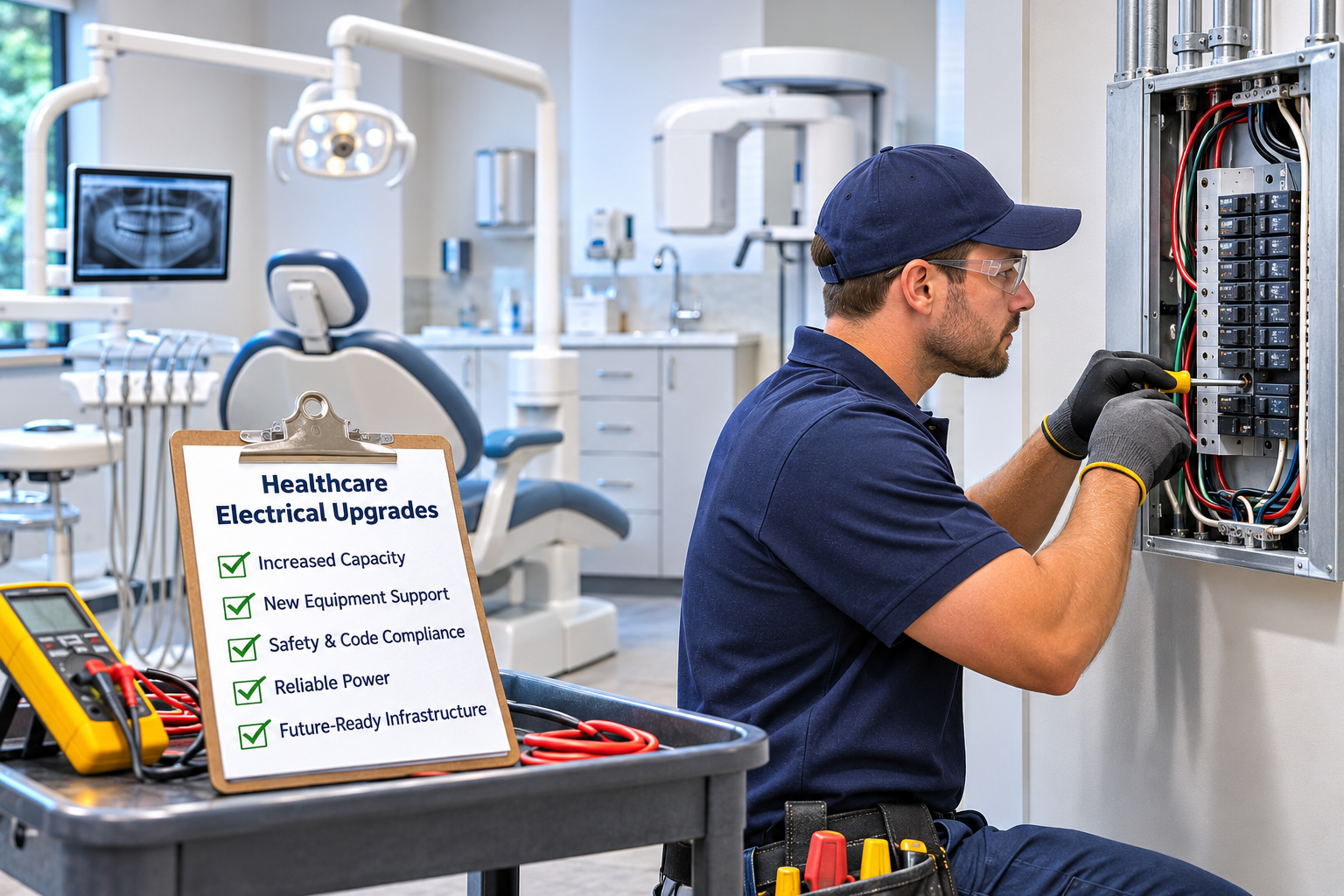
Expanding a medical practice or dental office involves much more than creating additional treatment rooms and purchasing new equipment. From digital imaging systems and dental chairs to sterilization equipment and advanced diagnostic technology, modern healthcare practices depend on electrical infrastructure that can support increasingly sophisticated operations. Whether you’re renovating an established medical office near WakeMed, expanding a dental practice in Cary, or opening a new treatment facility in Morrisville, evaluating your electrical system early can help prevent costly installation delays. After all, investing in advanced healthcare equipment won’t benefit your patients or your practice if your building’s electrical infrastructure cannot adequately support it.
Before installing new medical or dental equipment, healthcare practice owners should have a qualified commercial electrical contractor evaluate existing electrical capacity, wiring, distribution systems, equipment-specific circuit requirements, and backup power needs. Early electrical planning helps support reliable equipment operation, applicable code compliance, and a smoother renovation process.
When preparing your healthcare facility for an expansion, consider these important priorities:
-
Obtain electrical specifications from medical and dental equipment manufacturers before installation.
-
Evaluate existing electrical panels and distribution systems for available capacity.
-
Determine which equipment requires dedicated circuits and specialized wiring.
-
Coordinate electrical improvements with technology infrastructure and renovation plans.
-
Identify backup power requirements based on the services your practice provides.
At Box Electric Company, we bring decades of commercial electrical contracting experience to specialized facilities throughout Raleigh and the Research Triangle. Our experience working with healthcare environments, medical technology centres, and treatment facilities allows us to help practices prepare their electrical infrastructure for changing operational needs.
Why Medical and Dental Offices Have Specialized Electrical Requirements
Medical and dental offices have specialized electrical requirements because their equipment supports patient examinations, diagnostic procedures, treatment delivery, and other healthcare functions. Unlike conventional office buildings, where electrical systems primarily support computers, lighting, and everyday appliances, healthcare facilities may require additional electrical protection and infrastructure based on the services they provide.
Supporting Equipment That Requires Reliable Power
Modern healthcare equipment frequently combines sensitive electronic components, sophisticated software, and mechanical systems. Depending on the equipment, electrical interruptions or inadequate power quality may interfere with diagnostic procedures, equipment performance, and patient scheduling.
For example, a dental practice in North Raleigh introducing digital imaging may need additional electrical circuits and data connections. Similarly, a medical office expanding its diagnostic capabilities may require improvements to existing electrical distribution systems before new equipment can operate reliably.
Understanding Different Patient Care Environments
Not every room within a healthcare facility has the same electrical requirements. Administrative offices, reception areas, examination rooms, and specialized procedure rooms serve different functions and may therefore be subject to different electrical installation requirements.
Article 517 of the National Electrical Code addresses electrical installations within healthcare facilities, while NFPA 99, the Health Care Facilities Code, establishes additional requirements based on the risks associated with healthcare activities.
The applicable requirements depend on the facility’s classification, the nature of patient care, and locally adopted codes. We recommend evaluating these considerations during the earliest stages of your renovation or equipment installation project.
Electrical Upgrades to Consider When Installing New Medical and Dental Equipment
Medical facility electrical upgrades may include dedicated equipment circuits, additional electrical panels, specialized wiring, improved lighting, and expanded technology infrastructure. The specific improvements your practice needs will depend on the equipment you’re installing, your existing electrical capacity, and the clinical services you intend to provide.
Diagnostic and Medical Imaging Equipment
Adding diagnostic equipment can significantly change your practice’s electrical requirements. Depending on the manufacturer’s specifications, digital X-ray machines, ultrasound systems, and advanced imaging equipment may require dedicated circuits, specific operating voltages, and additional electrical protection.
Before purchasing equipment, obtain the manufacturer’s electrical installation specifications and share them with your electrical contractor. This allows necessary infrastructure improvements to be identified before equipment delivery and helps prevent unexpected installation delays.
Dental Chairs, Compressors, and Vacuum Systems
Modern dental treatment rooms rely on interconnected equipment, including powered dental chairs, examination lights, suction systems, air compressors, and digital imaging technology. Adding even a single dental operatory can introduce several new electrical requirements.
When planning dental office electrical wiring, it’s important to coordinate electrical connections with plumbing, cabinetry, equipment positioning, and mechanical systems. This coordination is particularly valuable when converting an existing commercial suite into a dental practice.
Sterilization Equipment and Laboratory Technology
Autoclaves, instrument washers, laboratory equipment, and other sterilization systems may introduce additional electrical demands. Furthermore, multiple pieces of equipment may operate simultaneously during busy appointment schedules.
For expanding practices in Cary and Morrisville, evaluating sterilization room capacity alongside treatment room requirements helps ensure that supporting infrastructure receives adequate attention. An expansion should improve your practice’s workflow rather than create new operational bottlenecks.
Specialized Lighting and Treatment Room Controls
Healthcare professionals depend on appropriate lighting for examinations, treatments, and detailed clinical procedures. When renovating treatment rooms, consider whether existing lighting circuits and controls can support your new equipment and room configuration.
Our commercial lighting services can support renovations involving examination rooms, dental operatories, administrative areas, and other specialized healthcare environments.
How to Determine Whether Your Practice Has Enough Electrical Capacity
Determining whether your medical or dental office has sufficient electrical capacity requires comparing existing electrical demand with the anticipated requirements of new equipment and expanded clinical operations. Available outlets and unused breaker spaces alone do not necessarily indicate that your electrical system can support additional loads.
Evaluate Your Existing Electrical Panels
Many medical offices throughout Raleigh occupy commercial properties originally constructed for different business purposes. Although these buildings may have adequate electrical infrastructure for conventional offices, converting them into healthcare facilities can introduce considerably greater demands.
An electrical assessment should consider:
-
Incoming electrical service capacity
-
Existing electrical panel ratings and available capacity
-
Equipment voltage and circuit requirements
-
Electrical demand during simultaneous equipment operation
-
Existing wiring condition and grounding arrangements
-
Distribution infrastructure and potential expansion limitations
-
Future equipment installations and treatment room additions
Depending on the findings, your practice may benefit from targeted circuit installations or more comprehensive electrical panel and distribution upgrades.
Recognize Warning Signs of Electrical Limitations
Existing electrical problems should be investigated before introducing additional equipment. Otherwise, a renovation could intensify problems that already interfere with your practice’s daily operations.
Common warning signs include:
-
Circuit breakers that repeatedly trip during equipment operation
-
Diagnostic equipment experiencing unexplained power interruptions
-
Flickering lights when larger equipment starts
-
Excessive reliance on power strips or extension cords
-
Electrical panels with limited expansion capacity
-
Frequent equipment shutdowns associated with electrical problems
These symptoms don’t automatically mean your entire electrical system requires replacement. However, they warrant evaluation by qualified healthcare electrical contractors to identify the underlying cause.
Reliable Power Distribution, Backup Power, and Healthcare Technology Infrastructure
Reliable healthcare facility electrical systems require properly planned power distribution, appropriate equipment protection, and contingency measures based on clinical and operational needs. As medical and dental practices become increasingly dependent on technology, electrical infrastructure and data connectivity must also work together effectively.
Determine Your Backup Power Requirements
A power outage can interrupt appointments, disable computer systems, affect temperature-sensitive medical supplies, and interfere with certain clinical procedures. For practices providing more specialized treatments, power interruptions may introduce additional patient safety concerns.
Depending on your facility’s classification and clinical activities, backup power considerations may include generators, uninterruptible power supplies, and essential electrical systems required by applicable codes.
However, not every medical or dental office requires the same backup power arrangements. We recommend identifying which systems must remain operational during an outage and which require sufficient power to allow procedures to end safely.
Coordinate Electrical Wiring With Technology Infrastructure
Modern healthcare practices depend on electronic health records, digital imaging networks, appointment management systems, and connected medical devices. Installing new equipment may therefore require improvements to both electrical and communications infrastructure.
Our technology services can support healthcare renovations involving:
-
Voice and data cabling
-
Network infrastructure
-
Server room electrical wiring
-
Medical technology centre infrastructure
-
Copper and fibre optic cabling where appropriate
-
Power connections for technology-dependent equipment
Coordinating these requirements during construction can help avoid reopening finished walls or modifying newly installed cabinetry after your renovation is complete.
Planning Medical Office Renovation Electrical Work Around Patient Care
Planning medical office renovation electrical work around patient care involves coordinating contractors, equipment suppliers, clinical staff, property managers, and inspection authorities. For established practices throughout Raleigh, Durham, and the Research Triangle, a carefully organized renovation schedule can help minimize disruptions to appointments and revenue.
Begin Electrical Planning Before Construction
One of the most expensive renovation mistakes is waiting until equipment arrives before determining its electrical requirements. Discovering insufficient electrical capacity after walls have been finished and treatment room cabinetry installed can create avoidable construction expenses.
Before beginning your renovation, provide your electrical contractor with equipment specifications, proposed floor plans, treatment room layouts, and anticipated expansion requirements. Equipment suppliers should also identify any specialized installation and commissioning responsibilities.
Account for Permits, Inspections, and Electrical Codes
Medical and dental practice renovations may require permits, inspections, and compliance with specialized healthcare electrical provisions. The City of Raleigh provides commercial permitting procedures for interior renovations, tenant improvements, and other commercial alterations.
North Carolina currently applies the 2020 National Electrical Code with state amendments to commercial electrical installations. Nevertheless, the specific requirements for your project depend on its scope, occupancy classification, clinical activities, and applicable regulatory requirements.
Working with an experienced electrical contractor early in the planning process helps ensure these considerations are incorporated into your construction schedule.
Consider a Phased Renovation Schedule
If your practice intends to remain open during renovations, consider completing electrical improvements in designated phases. For example, a dental office adding three new operatories might prioritize construction in the expansion area before scheduling necessary electrical shutdowns affecting existing treatment rooms.
Discuss planned outages, equipment relocation, construction access, and patient scheduling with your project team. Electrical work must also be coordinated with appropriate safety and infection-control procedures within occupied healthcare environments.
Prepare for Future Practice Growth
Today’s renovation may involve adding digital imaging equipment or expanding from four treatment rooms to six. However, your practice might introduce additional diagnostic services, specialized procedures, or new technology within the next several years.
We encourage practice owners to communicate these long-term objectives during electrical planning. Providing appropriate expansion capacity where feasible may help reduce the need for repeated infrastructure improvements.
Frequently Asked Questions About Electrical Upgrades for Medical and Dental Offices
Does installing new dental equipment require dedicated electrical circuits?
Some dental equipment requires dedicated circuits based on manufacturer specifications and applicable electrical codes. Our dental office electricians in Raleigh, NC, can evaluate your equipment requirements and existing electrical infrastructure to determine which improvements are necessary before installation.
Do all medical offices need backup generators?
No, backup generator requirements depend on the facility’s classification, clinical activities, and applicable codes. However, even practices without mandatory generator requirements may benefit from backup power solutions that support essential equipment, communications systems, and temperature-sensitive medical supplies.
Can you convert a traditional office into a medical or dental practice?
Yes, we provide commercial electrical installations, renovations, and infrastructure upgrades that can support healthcare tenant improvements. Converting an existing office typically requires evaluating electrical capacity, equipment connections, patient care requirements, lighting, and technology infrastructure before construction begins.
Can electrical upgrades be completed while our dental practice remains open?
Certain electrical improvements may be completed while other areas of your practice remain operational. However, work affecting existing electrical distribution systems may require scheduled shutdowns, making early coordination with your clinical staff and construction team particularly important.
How much do dental practice electrical upgrades cost in Raleigh?
Costs depend on your equipment specifications, existing electrical capacity, renovation scope, wiring requirements, and necessary distribution improvements. We recommend obtaining an electrical assessment before finalizing your construction budget to identify infrastructure expenses that might otherwise be overlooked.
When should I contact a medical office electrical contractor?
Ideally, contact an electrical contractor during the initial design and equipment selection stages of your project. Early involvement allows us to evaluate infrastructure requirements, coordinate with equipment suppliers, and identify potential electrical limitations before they interfere with your renovation schedule.
Give Your Healthcare Practice the Electrical Infrastructure It Needs to Grow
Every investment you make in your medical or dental practice ultimately supports a larger objective: delivering quality patient care while building a successful, efficient healthcare business. Whether you’re introducing advanced diagnostic technology, expanding your treatment capacity, or modernizing an older commercial property, your electrical infrastructure plays an essential role in achieving those goals. Addressing electrical requirements early can help prevent avoidable construction delays, unexpected expenses, and interruptions to patient services.
As experienced medical office electrical contractors in Raleigh, NC, we understand the specialized demands of technology-dependent healthcare environments. From commercial electrical installations and distribution upgrades to comprehensive renovations, lighting improvements, and data infrastructure, we’re here to support your practice’s continued growth. Contact our team today to discuss your upcoming medical or dental office expansion throughout the Research Triangle.