

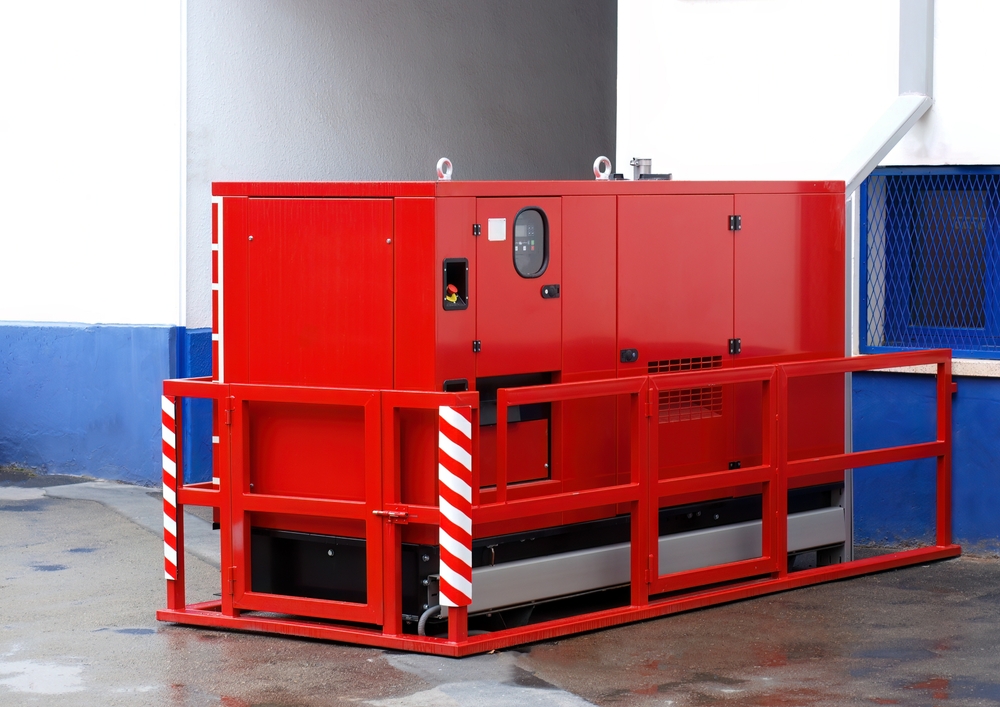
A power outage can bring office operations, retail transactions, refrigeration, security systems, communications, and other essential building functions to a stop. For commercial properties in Raleigh, NC, backup power planning is especially relevant because severe thunderstorms, tropical systems, high winds, and falling trees can disrupt electrical service across the region.
Commercial generator installation requires more than choosing a generator and connecting it to a building. A reliable system starts with identifying critical loads, calculating electrical demand, selecting an appropriate generator and transfer equipment, planning a compliant installation location, and coordinating permits and inspections. The goal is to keep the systems that matter most operating safely when utility power is unavailable.
What local businesses should know
- Generator sizing should be based on actual electrical loads and the equipment a business needs to operate during an outage.
- Raleigh commercial projects may require permitting, plan review, and inspections depending on the installation scope.
- Wake County businesses should consider both severe thunderstorms and tropical weather when developing backup power plans.
- Generator placement must account for electrical connections, equipment clearances, ventilation or exhaust requirements, fuel supply, and site conditions.
- Testing and ongoing maintenance are part of keeping a standby power system ready for an actual outage.
Why Does Backup Power Planning Matter for Raleigh Commercial Buildings?
Backup power planning matters for Raleigh commercial buildings because an outage can interrupt far more than lighting. Depending on the property, loss of utility power can affect point-of-sale equipment, servers, access controls, refrigeration, pumps, communications, HVAC components, security systems, and other operational equipment.
The National Weather Service office in Raleigh identifies thunderstorms, hurricanes, flooding, and other severe weather among the hazards affecting central North Carolina. Its hurricane preparedness guidance also notes that tropical cyclone impacts can extend hundreds of miles inland and that damaging winds can contribute to power and communications outages.
That makes backup power relevant well beyond coastal areas. Commercial properties near Downtown Raleigh, North Hills, Midtown, Brier Creek, and other parts of Wake County may all have operations that become difficult or impossible when electricity is interrupted.
At Box Electric Company, we approach commercial generator planning as an electrical system project, not simply an equipment purchase. We consider what the building needs to support, how the generator will integrate with existing electrical equipment, and what installation requirements apply to the property.
What Should Businesses Determine Before Choosing a Generator?
Businesses should determine which loads must remain powered, how much electrical demand those loads create, and how long backup operation may be needed before selecting generator equipment.
A restaurant near Downtown may prioritize refrigeration, selected kitchen equipment, emergency systems, and point-of-sale equipment. An office near North Hills may focus on networking, communications, security, and selected HVAC loads. A warehouse or light industrial property may have motors, controls, loading equipment, or other specialized loads.
Trying to power an entire building can require substantially different equipment than supporting a carefully selected group of essential circuits. A professional load assessment helps define the appropriate approach before equipment is ordered.
What Local Data and Conditions Should Property Owners Consider?
Local planning should account for central North Carolina’s exposure to thunderstorms and tropical weather, along with the possibility of wind, flooding, and utility disruptions associated with major storms.
The National Weather Service Raleigh office states that North Carolina’s most active months for tropical systems are August, September, and October, although impacts can occur outside that period. It also warns that falling trees during damaging winds can affect power lines and lead to extended utility disruptions.
For a commercial property, that supports planning before severe weather is approaching rather than waiting until outage risk becomes immediate.
How Can an Outage Affect a Raleigh Business?
An outage can affect a Raleigh business through lost operating time, interrupted transactions, inaccessible electronic systems, temperature changes, spoiled temperature-sensitive inventory, and disruptions to security or communications.
The exact impact varies by property. A medical office has different continuity needs than a retail store in Midtown. A restaurant has different priorities than a warehouse near the I-40 corridor. Backup power planning should therefore begin with the consequences of losing specific electrical systems rather than a generic generator size.
What Are the Warning Signs That a Business Needs Better Backup Power Planning?
Businesses should review backup power options when existing outage plans leave essential operations exposed or when an existing generator no longer matches the property’s electrical needs.
Common warning signs include:
- Previous outages have caused significant operational downtime.
- Employees rely on improvised procedures whenever utility power fails.
- Refrigeration, servers, communications, security, or other critical equipment has no backup source.
- The property has expanded since an existing generator was installed.
- New electrical loads have been added without reviewing generator capacity.
- An existing generator has trouble starting or carrying its intended load.
- Generator maintenance or testing records are incomplete.
- Portable equipment is being treated as a long-term substitute for a properly planned standby system.
When Should a Commercial Property Call an Electrical Professional?
A commercial property should involve a qualified electrical professional when generator planning requires load calculations, electrical modifications, transfer equipment, permanent wiring, or integration with the building’s distribution system.
Facility managers can inventory critical equipment and document previous outage problems themselves. Electrical design decisions should go further. Incorrect sizing or improper system integration can prevent equipment from operating as expected when utility power fails.
For Raleigh properties, permitting and inspection requirements also need to be considered. The City of Raleigh states that commercial construction and alteration processes are used to ensure compliance with the North Carolina State Building Code and applicable local requirements. Commercial inspections include electrical work.
What Common Factors Shape Commercial Generator Installation?
Commercial generator installation is commonly shaped by electrical demand, starting loads, generator location, fuel arrangements, transfer equipment, existing service capacity, and the property’s physical layout.
Large motors and HVAC equipment can create substantial starting demands. Generator placement can affect conduit routing and installation complexity. Existing switchgear or electrical panels may influence how backup power can be integrated.
Site conditions also matter. A dense Downtown Raleigh property can present different placement challenges than a freestanding commercial building in Brier Creek or a larger facility elsewhere in Wake County.
How Can Businesses Prepare and Maintain a Backup Power System?
Businesses can prepare by documenting critical loads, keeping generator areas accessible, following manufacturer maintenance requirements, and arranging periodic testing before severe-weather periods.
A useful annual planning window is before North Carolina’s peak tropical activity in late summer and early fall. Facility teams can check that generator areas remain clear, review fuel arrangements where applicable, update critical-load lists, and confirm that operational procedures are understood.
DIY work should stop at basic visual checks and planning. Electrical troubleshooting, transfer equipment work, permanent connections, and system modifications belong with qualified professionals.
What Results Should Businesses Expect From Professional Generator Installation?
Professional generator installation should provide a backup power system designed around defined building loads, appropriate transfer equipment, site conditions, and applicable installation requirements.
That does not mean every circuit must remain operational during an outage. A properly planned system may instead prioritize the functions the business considers essential. Establishing those priorities early can produce a more practical backup power strategy and make outage procedures clearer for employees and facility managers.
What Generator Planning Mistakes Should Raleigh Businesses Avoid?
The biggest generator planning mistakes involve sizing equipment without a load assessment, overlooking installation constraints, and failing to plan for maintenance after installation.
Mistake: Selecting a generator based only on building square footage.
Consequence: Electrical demand can vary dramatically between similarly sized commercial properties.
Better approach: Calculate the loads the generator is actually expected to support.
Mistake: Choosing equipment before confirming placement.
Consequence: Site constraints can complicate the project.
Better approach: Evaluate the electrical room, exterior location, routing, clearances, and other installation requirements first.
Mistake: Installing backup power and forgetting about it.
Consequence: Problems may remain unnoticed until an outage occurs.
Better approach: Follow an ongoing inspection, testing, and maintenance plan.
What Is a Common Commercial Generator Scenario in Raleigh?
A common Raleigh scenario is a growing commercial property that originally had no permanent backup system but now depends heavily on electronic equipment, communications, security, and other powered systems.
Management may initially ask what generator size to purchase. The better starting point is identifying what must operate during an outage. After those priorities are established, the electrical loads, transfer method, generator location, and installation requirements can be evaluated together.
This is a common planning scenario, not a specific Box Electric Company project or case study.
What Services Support Reliable Commercial Backup Power?
Commercial backup power solutions can include generator installation planning, electrical load evaluation, transfer equipment installation, electrical connections, system upgrades, troubleshooting, and related electrical work based on the building’s needs.
We can help property owners and facility managers evaluate how backup power fits into the existing electrical system and what work may be required for the planned installation.
How Should Businesses Compare Their Backup Power Options?
Businesses should compare backup power options according to the loads that must remain operational, acceptable downtime, installation constraints, and long-term maintenance requirements.
A portable solution may support limited temporary needs, while a permanently installed standby system can be designed for automatic transfer and specific building loads. Partial-building backup can prioritize essential equipment, while broader backup requires greater capacity and potentially more extensive electrical work.
The right comparison begins with operational priorities rather than generator specifications alone.
Where Can Commercial Generator Services Be Needed Around Raleigh?
Commercial generator planning is relevant throughout Raleigh and surrounding Wake County communities where businesses depend on continuous electrical service. Properties in areas such as Downtown, North Hills, Midtown, and Brier Creek can have very different electrical and site requirements.
Nearby communities such as Cary, Garner, and Wake Forest may also have commercial properties with similar backup power needs, subject to the requirements of the applicable local jurisdiction.
What Can Happen If a Business Delays Backup Power Planning?
Delaying backup power planning can leave a business dependent on utility restoration timelines while essential electrical systems remain unavailable.
The financial effect depends on the operation, but downtime can interrupt sales, employee productivity, communications, refrigeration, security, or customer service. Waiting until severe weather is forecast can also leave little time for a proper electrical assessment, equipment planning, permitting, and installation.
FAQ
Do commercial generators require permits in Raleigh, NC?
Commercial generator work may require permits and inspections depending on the project scope. The City of Raleigh manages non-residential permitting and commercial inspections, including electrical inspections. Because requirements can vary by installation, property owners should confirm the applicable process for their specific project before work begins.
How do I choose the right generator size for a Raleigh commercial building?
The right generator size is determined by the electrical loads you intend to support, including starting demands from motors and other equipment. Building size alone is not enough. A load assessment can identify critical equipment and help determine the generator capacity needed for the property’s actual operating priorities.
Should a Raleigh business back up the entire building?
A Raleigh business does not necessarily need to back up the entire building. Some properties benefit from supporting selected critical loads, while others have operational requirements that justify broader backup coverage. Comparing outage priorities with electrical demand and project scope helps determine the most appropriate strategy.
When should Wake County businesses plan generator installation?
Wake County businesses should plan generator installation well before they expect to need backup power. The National Weather Service identifies August through October as North Carolina’s most active period for tropical systems, making spring or early summer a practical time to review outage preparedness before peak tropical activity.
Can a generator automatically power a commercial building during an outage?
A properly designed standby generator system can use transfer equipment to shift designated electrical loads from utility power to generator power when required. The exact operation depends on the generator, transfer equipment, electrical distribution system, and installation design, so these components need to be planned together.
Where can a commercial generator be installed on a Raleigh property?
Generator placement depends on site layout, equipment requirements, electrical routing, clearances, fuel arrangements, and applicable codes or development requirements. Commercial properties in dense areas such as Downtown Raleigh may face different placement constraints than larger suburban sites, so location should be evaluated early.
Do commercial generators need regular maintenance in North Carolina?
Commercial generators need maintenance and testing according to the equipment manufacturer’s requirements and the needs of the installed system. North Carolina businesses should avoid assuming that a generator that rarely runs is automatically ready. Routine attention can reveal battery, fuel, starting, or other operational problems before an outage.
Does Raleigh inspect commercial generator electrical work?
Raleigh conducts commercial inspections for permitted construction work, including electrical inspections. The city states that its commercial inspectors apply North Carolina Building Codes to building systems and that approved plans and relevant documentation should be available during inspection when applicable.
Plan Reliable Backup Power for Your Raleigh Commercial Property
A commercial generator is most useful when the entire backup power system has been planned around the building’s real electrical and operational needs. We can help evaluate those needs and develop an installation approach suited to your Raleigh-area property.
Keep Essential Business Systems Ready for the Next Outage
Get a clear plan for backup power that considers your building, critical electrical loads, and installation requirements.