

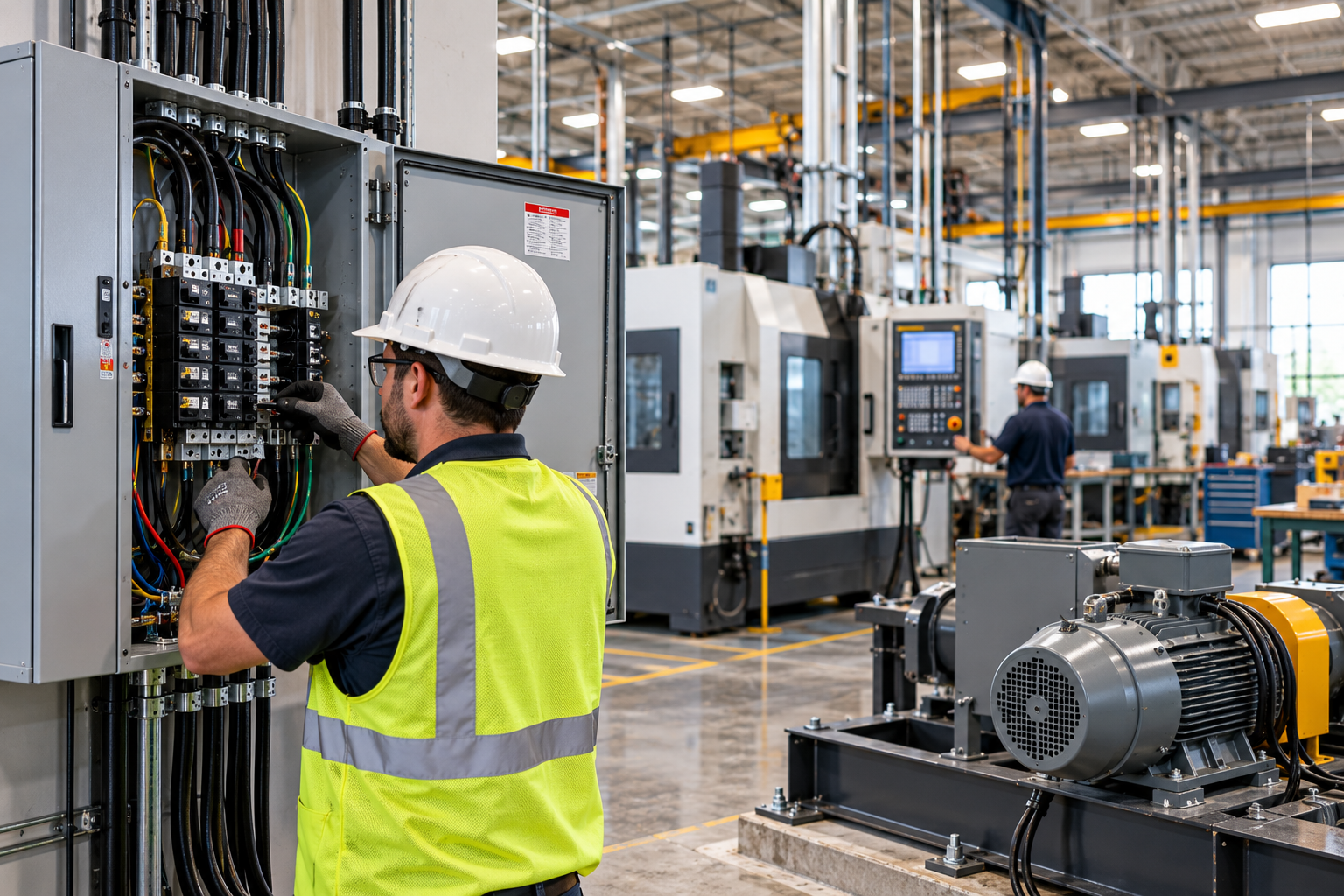
You’ve found a piece of equipment that could help your manufacturing facility increase production, improve efficiency, or replace machinery that’s becoming unreliable. The specifications look promising, the purchase has been approved, and your team is preparing for installation. But before that new machine arrives, there’s an important question to answer: can your facility’s existing electrical system support it?
For manufacturers throughout Raleigh and the Research Triangle, installing new machinery involves more than finding enough floor space and connecting a power source. Equipment voltage, amperage, phase requirements, circuit protection, and available electrical capacity all influence whether the installation can proceed safely and efficiently.
An industrial electrical contractor can help evaluate these requirements before equipment is delivered, identify necessary electrical upgrades, and coordinate the installation with your production schedule.
Before purchasing or installing new machinery, consider these important factors:
- Electrical capacity: Determine whether your facility’s existing electrical distribution system can accommodate the additional equipment.
- Equipment specifications: Review voltage, amperage, phase, starting requirements, and manufacturer installation instructions.
- Circuit protection: Identify appropriate breakers, disconnects, and dedicated circuits for the machinery.
- Equipment placement: Consider wiring routes, maintenance access, and connections to surrounding production systems.
- Installation scheduling: Coordinate electrical work with equipment suppliers, contractors, and production managers to minimize disruptions.
At Box Electric Company, we’ve provided commercial and industrial electrical services throughout Raleigh and North Carolina since 1995. Our experience includes new electrical wiring, system upgrades, renovations, repairs, and technology infrastructure for manufacturing plants and other industrial facilities.
Why Should Manufacturers Evaluate Electrical Capacity Before Installing Machinery?
Manufacturers should evaluate electrical capacity before installing machinery because new equipment can increase electrical demand beyond what the existing panels, circuits, or distribution system can safely accommodate. Identifying these limitations early helps facilities determine whether upgrades are necessary before the equipment arrives.
A manufacturing facility in Raleigh might have adequate power for its current production line but insufficient capacity for an additional machine. Even when unused breaker spaces are available, that doesn’t necessarily mean the electrical system can handle the new load.
An industrial electrician can review existing equipment, electrical drawings, panel information, and anticipated loads to help determine whether the installation is feasible.
This evaluation may reveal the need for additional circuits, larger conductors, panel modifications, or broader power distribution improvements. Addressing those requirements before delivery can help prevent installation delays and unexpected expenses.
Understanding Voltage, Amperage, and Phase Requirements
Understanding voltage, amperage, and phase requirements is essential because industrial machinery must receive electrical power that matches its design specifications. Connecting equipment to an unsuitable power source can cause performance problems, damage components, or create serious safety hazards.
Voltage Requirements
Industrial equipment may operate at different voltages depending on its design and intended application. Many manufacturing facilities use three-phase electrical systems, with common equipment ratings including 208, 240, and 480 volts.
However, the voltage available in a building isn’t necessarily compatible with every machine.
For example, a manufacturer in Durham purchasing equipment designed for 480-volt operation shouldn’t assume that an existing 208-volt supply will be sufficient. Depending on the circumstances, the facility may require electrical modifications or appropriately designed voltage conversion equipment.
Amperage and Electrical Demand
Amperage helps determine the electrical current equipment requires during operation. However, the current a machine draws while running may differ from its starting current or other operating conditions.
Motors, compressors, and certain production equipment can create substantial electrical demand during startup. These characteristics should be reviewed when evaluating conductors, overcurrent protection, and available system capacity.
Single-Phase vs. Three-Phase Power
Three-phase power is commonly used in industrial facilities because it supports many types of motors and manufacturing equipment.
Some smaller machines operate on single-phase power, while larger production systems may require three-phase connections.
Before ordering new equipment, confirm that its electrical requirements match the facility’s available service. Qualified electrical professionals can identify compatibility concerns and explain potential upgrade options.
When Does New Machinery Require Electrical Upgrades?
New machinery may require electrical upgrades when existing circuits, panels, conductors, or distribution equipment cannot safely support its operating requirements. The necessary improvements depend on the machine’s specifications, available electrical capacity, and existing infrastructure.
Dedicated Circuits for Industrial Equipment
Dedicated circuits for industrial equipment may be necessary when machinery requires an individual branch circuit or specific overcurrent protection.
A production machine might include motors, heating elements, or electronic controls with requirements that differ from ordinary building equipment. Using an unsuitable existing circuit could lead to nuisance tripping or other electrical problems.
The manufacturer’s specifications and applicable electrical codes should guide circuit selection.
Electrical Panel Modifications
Manufacturing facility electrical upgrades may involve adding circuits, replacing distribution panels, or modifying existing equipment.
For example, a production facility in Garner expanding its machining operations may need additional electrical capacity to accommodate several new machines.
A professional evaluation can help establish whether targeted panel modifications are sufficient or whether more extensive improvements are necessary.
Industrial Power Distribution Improvements
Larger expansions may require changes to feeders, transformers, switchgear, or other components of the facility’s power distribution system.
These projects require careful planning because electrical modifications may affect multiple production areas. Depending on the work involved, coordination with the serving utility and applicable permitting authorities may also be necessary.
At Box Electric Company, we provide industrial electrical wiring, electrical panel installation, upgrades, and related services for commercial and manufacturing facilities. We work with businesses to review their project requirements and identify appropriate electrical improvements.
How Equipment Placement Affects Industrial Electrical Installation
Equipment placement affects industrial electrical installation because machinery locations determine wiring routes, disconnect accessibility, maintenance clearances, and connections to surrounding systems. Even when a facility has sufficient electrical capacity, an unsuitable equipment layout can complicate installation and future maintenance.
Conduit Routing and Wiring Access
Industrial wiring must be routed in a way that accommodates the building’s layout, equipment locations, and applicable installation requirements.
For example, moving a machine across a production floor may require additional conduit, electrical supports, or changes to existing wiring pathways.
Overhead equipment, structural columns, material-handling systems, and other machinery can also limit available routes.
Disconnect Locations and Maintenance Access
Industrial equipment often requires a disconnecting means appropriate to the installation. Depending on the equipment and applicable codes, disconnect location and accessibility requirements may influence the final layout.
Maintenance personnel also need safe access to electrical components for inspection, troubleshooting, and servicing.
The Occupational Safety and Health Administration establishes requirements for controlling hazardous energy during machinery servicing and maintenance. Proper equipment isolation and lockout/tagout procedures are important considerations when planning industrial installations.
Production Line Reconfiguration
Adding new machinery may involve relocating other equipment or changing how materials move through the facility.
A manufacturing plant in Morrisville might rearrange workstations to accommodate a new automated production system. That change could affect electrical connections, control wiring, network cabling, and other infrastructure.
Reviewing the entire production layout before installation helps identify potential conflicts.
Why Electrical Coordination Matters During Machinery Installation
Electrical coordination matters during machinery installation because equipment suppliers, contractors, maintenance teams, and production managers often have interconnected responsibilities. Clear communication helps ensure that electrical infrastructure is ready when equipment arrives and that installation work doesn’t unnecessarily interrupt operations.
Coordinating With Equipment Manufacturers
Equipment suppliers can provide electrical specifications, installation drawings, and commissioning requirements.
These documents should be reviewed before the electrical work is finalized. If questions arise about voltage, protection requirements, or equipment connections, resolving them early can prevent expensive changes.
Working With Other Contractors
Industrial equipment installations may also involve mechanical contractors, rigging companies, automation specialists, and general contractors.
Each team needs to understand when its work must be completed. For example, electrical connections may need to be installed after machinery is positioned but before equipment testing begins.
Reducing Production Disruption
Manufacturing facilities often need to remain operational during renovations and equipment upgrades.
Scheduling electrical work around planned shutdowns, maintenance windows, or lower-production periods can help reduce disruption.
However, some electrical modifications require equipment to be de-energized. Qualified electricians should establish safe work procedures rather than attempting to avoid necessary shutdowns.
Electrical Considerations for Automated and Technology-Driven Manufacturing
Automated manufacturing equipment may require additional electrical and communications infrastructure beyond the primary power connection. Control systems, sensors, industrial networks, and related technology can influence how the installation should be planned.
Facilities throughout Raleigh and Research Triangle Park increasingly rely on connected production systems and specialized technology infrastructure.
When introducing automated equipment, project managers should review power requirements alongside control wiring, data connections, and communication needs.
Electrical noise, grounding and bonding, equipment compatibility, and the separation of certain power and signal pathways may also require attention, depending on the system design.
Our experience supporting technology-driven facilities includes electrical wiring, upgrades, data cabling, and other infrastructure services. We help manufacturers evaluate the electrical needs associated with changing production environments.
Common Mistakes to Avoid When Installing New Manufacturing Equipment
The most common electrical installation mistakes involve purchasing machinery before confirming power compatibility, overlooking available system capacity, and failing to coordinate installation requirements. These oversights can lead to additional costs, scheduling conflicts, or delays in bringing equipment into service.
One mistake is assuming that an existing electrical panel can accommodate new machinery simply because unused breaker spaces remain.
Another is overlooking equipment startup demand or specialized circuit requirements. These factors can affect the electrical design even when the machine’s normal operating load appears manageable.
Finally, waiting until delivery to involve an industrial electrical contractor can leave little time for required upgrades.
For Raleigh manufacturers, discussing the project before finalizing equipment purchases provides an opportunity to identify potential challenges while the installation plan is still flexible.
Frequently Asked Questions About Industrial Machinery Electrical Installation
1. Should I contact an industrial electrical contractor before buying new machinery?
Yes, involving an industrial electrician before purchasing machinery can help identify potential electrical capacity limitations, power compatibility issues, and installation requirements. This information may influence equipment selection, project budgeting, and the installation schedule.
2. What electrical information should Raleigh manufacturers request from equipment suppliers?
Manufacturers should request voltage, amperage, phase, frequency, motor specifications, circuit protection requirements, and installation instructions. Equipment drawings and information about starting current, disconnects, and control connections may also be necessary.
3. Does installing new machinery always require an electrical panel upgrade?
No, an electrical panel upgrade isn’t always necessary. If the existing system has sufficient capacity and compatible circuits can be installed safely, smaller modifications may be adequate. A qualified electrician should evaluate the proposed load before determining what work is required.
4. Does Box Electric Company provide industrial electrical services in Raleigh, NC?
Yes. We provide industrial electrical services for manufacturing plants, factories, technology facilities, and other commercial properties. Our capabilities include new wiring, panel installation, electrical upgrades, repairs, and related infrastructure improvements throughout Raleigh and North Carolina.
5. Can new machinery be installed while a manufacturing facility remains operational?
Some installation work can be coordinated around ongoing production, depending on the equipment and electrical infrastructure involved. However, certain tasks require shutdowns and properly controlled hazardous-energy procedures. Planning with the electrical contractor and production team helps establish a safe schedule.
6. What electrical upgrades might be needed when expanding a production line?
Production-line expansions may require additional circuits, panel modifications, new feeders, updated distribution equipment, or changes to conduit routing. The exact requirements depend on equipment specifications, available capacity, and how the expanded production line will operate.
Prepare Your Raleigh Manufacturing Facility for Its Next Equipment Upgrade
Adding new machinery can create exciting opportunities for your manufacturing business, whether you’re increasing production capacity, replacing aging equipment, or introducing more advanced technology. However, those improvements depend on having an electrical system that can safely support the equipment and its operating requirements. For manufacturers throughout Raleigh and the Research Triangle, reviewing electrical capacity, power specifications, installation locations, and scheduling requirements before delivery can help prevent unnecessary complications. Careful preparation also gives your team a better understanding of the improvements needed before the new machinery becomes part of daily operations.
At Box Electric Company, we understand that manufacturing facilities depend on reliable electrical infrastructure to keep production moving. Since 1995, we’ve supported commercial and industrial businesses throughout North Carolina with electrical wiring, renovations, upgrades, repairs, and technology services. Whether you’re installing one machine or preparing for a larger production expansion, our team can help evaluate your electrical requirements and discuss the work needed to support your project. We’re here to help you plan improvements that fit your facility’s operations and long-term needs.
Contact Box Electric Company today to discuss your industrial equipment installation or manufacturing facility electrical upgrades in Raleigh, NC, and request an estimate.